

产品中心
PRODUCTS CENTER


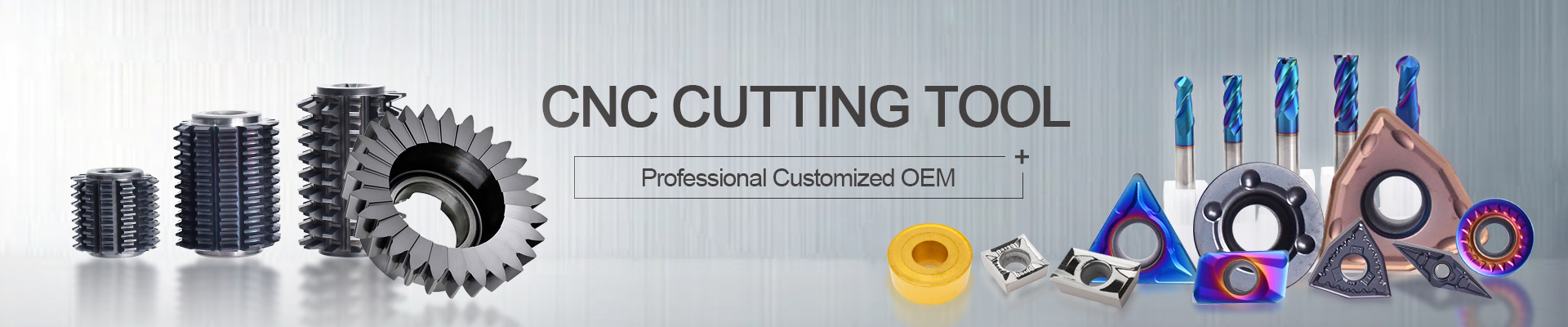
These inserts employ an indexable design, typically in regular polygonal shapes with multiple pre-ground cutting edges. Once one cutting edge becomes worn, the operator can quickly index it to a fresh edge or replace the insert, minimizing machine downtime and enabling efficient, economical, and consistent continuous production. Their geometry, chipbreaker pattern, edge preparation, and grade are all precisely engineered to match specific workpiece materials (e.g., steel, stainless steel, cast iron, non-ferrous metals, or superalloys) and operations (roughing, finishing), meeting the stringent demands for high precision, productivity, and automation in modern CNC turning.
These inserts employ an indexable design, typically in regular polygonal shapes with multiple pre-ground cutting edges. Once one cutting edge becomes worn, the operator can quickly index it to a fresh edge or replace the insert, minimizing machine downtime and enabling efficient, economical, and consistent continuous production. Their geometry, chipbreaker pattern, edge preparation, and grade are all precisely engineered to match specific workpiece materials (e.g., steel, stainless steel, cast iron, non-ferrous metals, or superalloys) and operations (roughing, finishing), meeting the stringent demands for high precision, productivity, and automation in modern CNC turning.
These inserts employ an indexable design, typically in regular polygonal shapes with multiple pre-ground cutting edges. Once one cutting edge becomes worn, the operator can quickly index it to a fresh edge or replace the insert, minimizing machine downtime and enabling efficient, economical, and consistent continuous production. Their geometry, chipbreaker pattern, edge preparation, and grade are all precisely engineered to match specific workpiece materials (e.g., steel, stainless steel, cast iron, non-ferrous metals, or superalloys) and operations (roughing, finishing), meeting the stringent demands for high precision, productivity, and automation in modern CNC turning.
These inserts employ an indexable design, typically in regular polygonal shapes with multiple pre-ground cutting edges. Once one cutting edge becomes worn, the operator can quickly index it to a fresh edge or replace the insert, minimizing machine downtime and enabling efficient, economical, and consistent continuous production. Their geometry, chipbreaker pattern, edge preparation, and grade are all precisely engineered to match specific workpiece materials (e.g., steel, stainless steel, cast iron, non-ferrous metals, or superalloys) and operations (roughing, finishing), meeting the stringent demands for high precision, productivity, and automation in modern CNC turning.
These inserts employ an indexable design, typically in regular polygonal shapes with multiple pre-ground cutting edges. Once one cutting edge becomes worn, the operator can quickly index it to a fresh edge or replace the insert, minimizing machine downtime and enabling efficient, economical, and consistent continuous production. Their geometry, chipbreaker pattern, edge preparation, and grade are all precisely engineered to match specific workpiece materials (e.g., steel, stainless steel, cast iron, non-ferrous metals, or superalloys) and operations (roughing, finishing), meeting the stringent demands for high precision, productivity, and automation in modern CNC turning.
These inserts employ an indexable design, typically in regular polygonal shapes with multiple pre-ground cutting edges. Once one cutting edge becomes worn, the operator can quickly index it to a fresh edge or replace the insert, minimizing machine downtime and enabling efficient, economical, and consistent continuous production. Their geometry, chipbreaker pattern, edge preparation, and grade are all precisely engineered to match specific workpiece materials (e.g., steel, stainless steel, cast iron, non-ferrous metals, or superalloys) and operations (roughing, finishing), meeting the stringent demands for high precision, productivity, and automation in modern CNC turning.
These inserts employ an indexable design, typically in regular polygonal shapes with multiple pre-ground cutting edges. Once one cutting edge becomes worn, the operator can quickly index it to a fresh edge or replace the insert, minimizing machine downtime and enabling efficient, economical, and consistent continuous production. Their geometry, chipbreaker pattern, edge preparation, and grade are all precisely engineered to match specific workpiece materials (e.g., steel, stainless steel, cast iron, non-ferrous metals, or superalloys) and operations (roughing, finishing), meeting the stringent demands for high precision, productivity, and automation in modern CNC turning.
These inserts employ an indexable design, typically in regular polygonal shapes with multiple pre-ground cutting edges. Once one cutting edge becomes worn, the operator can quickly index it to a fresh edge or replace the insert, minimizing machine downtime and enabling efficient, economical, and consistent continuous production. Their geometry, chipbreaker pattern, edge preparation, and grade are all precisely engineered to match specific workpiece materials (e.g., steel, stainless steel, cast iron, non-ferrous metals, or superalloys) and operations (roughing, finishing), meeting the stringent demands for high precision, productivity, and automation in modern CNC turning.
These inserts employ an indexable design, typically in regular polygonal shapes with multiple pre-ground cutting edges. Once one cutting edge becomes worn, the operator can quickly index it to a fresh edge or replace the insert, minimizing machine downtime and enabling efficient, economical, and consistent continuous production. Their geometry, chipbreaker pattern, edge preparation, and grade are all precisely engineered to match specific workpiece materials (e.g., steel, stainless steel, cast iron, non-ferrous metals, or superalloys) and operations (roughing, finishing), meeting the stringent demands for high precision, productivity, and automation in modern CNC turning.

